
Why Florida windows wear out faster than people expect
Most Central Florida homes built in the 1970s, 80s, and 90s shipped with original aluminum-frame single-pane windows. They were cheap, light, and easy to install — and almost none of them were designed for 30+ years of Florida sun, humidity, and storm exposure. After three decades, the sashes stick, the rollers fail, the seals fog, the frames corrode, and the energy performance was never there to begin with. The result is predictable: drafts, condensation, hot rooms, and rising cooling bills.
Newer builder-grade windows from the 2000s era last longer but still age. Insulated glass units (IGUs) with failed seals fog from the inside and can't be repaired — the unit has to be replaced. Vinyl frames in direct sun can warp at the corners. Locks and hardware wear out. The question stops being whether to replace and starts being when.
Warning signs worth paying attention to
- Fogged or hazy insulated glass that won't wipe clean from either side
- Sashes that don't stay open, drag, or no longer lock
- Visible daylight or air movement around the frame
- Water staining on the interior sill or wall below the window
- Rotted wood sills or corroded aluminum hardware
- Rising cooling bills with no change in habits or HVAC age
- Hot rooms or noticeable radiant heat through the glass
- Single-pane glass anywhere in the home
Any one of these is a signal to start a real conversation. Multiple signals usually mean replacement will pay back in comfort, energy performance, and curb appeal — not just long-term resale.
Not sure if your windows are at the end of the line? Book a free in-home walkthrough — we'll tell you straight.
Request an estimateStandard replacement vs impact-rated replacement
Florida homeowners outside the wind-borne debris region have a real choice between high-quality non-impact replacement windows and comparable impact-rated units. Standard replacement windows are still a major upgrade over original aluminum frames — better seals, better hardware, low-E glass, and quieter operation. Impact-rated replacements add laminated glass for storm, security, sound, and UV benefits. Our companion pages cover both choices in depth:
- Hurricane windows in Florida — code-compliant impact protection
- Impact windows in Florida — laminated glass benefits beyond storm season
Frame materials honest comparison
Vinyl
The most common replacement frame material in Florida. Low thermal conductivity, no painting, available in white and a limited palette of factory colors. Good middle-ground performance for the cost. Quality varies widely between manufacturers — frame wall thickness and reinforcement matter.
Aluminum
Strong and slim-sighted, which is why it shows up on coastal and architectural projects. Modern thermally broken aluminum frames perform far better than the original 1970s frames they often replace. Higher conductivity than vinyl, but the frame strength supports larger openings.
Fiberglass and composite
A premium option that combines vinyl-like thermal performance with greater dimensional stability and paintability. Less common in standard Florida replacement projects but a strong choice for specific aesthetic goals.
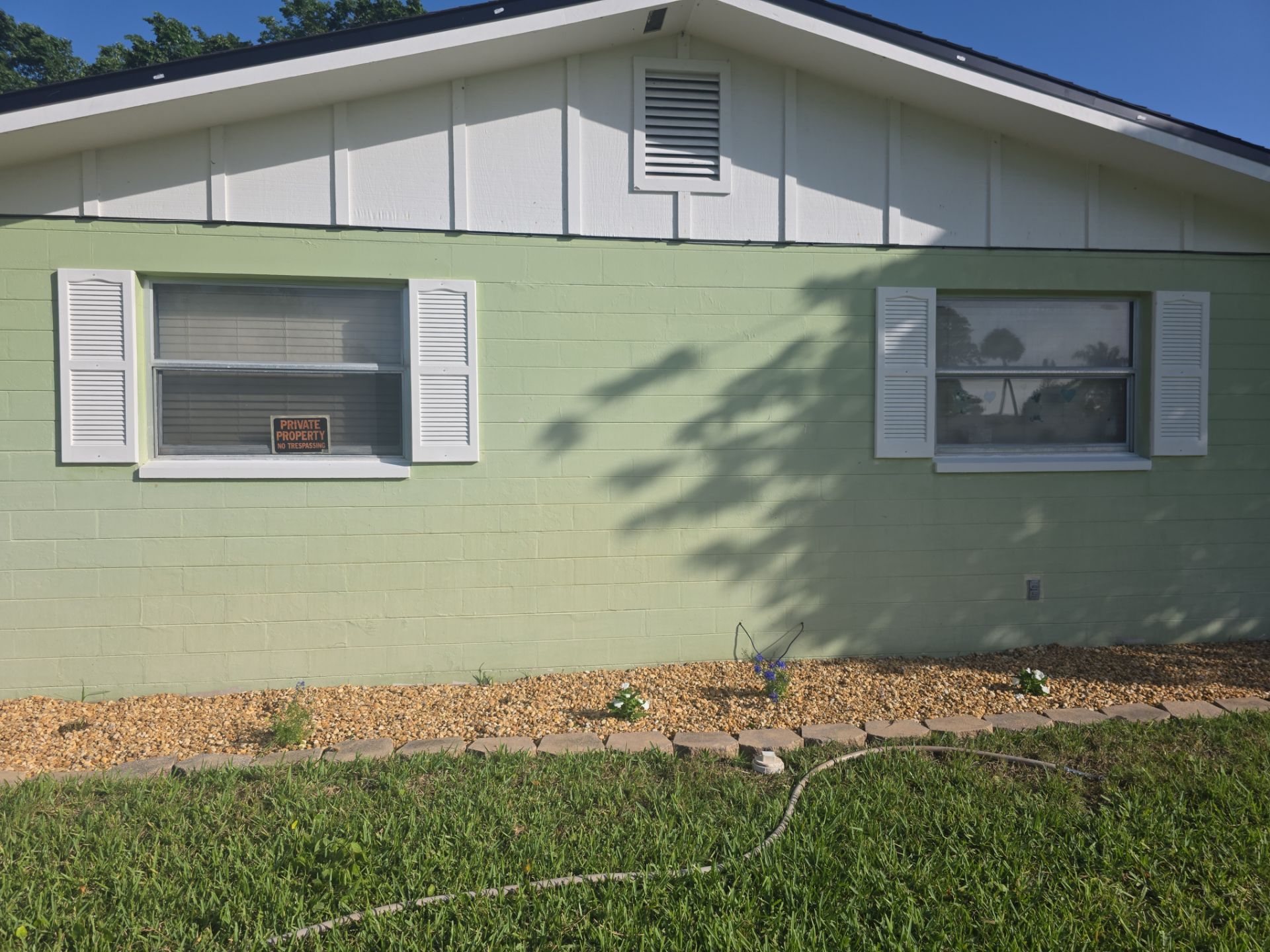
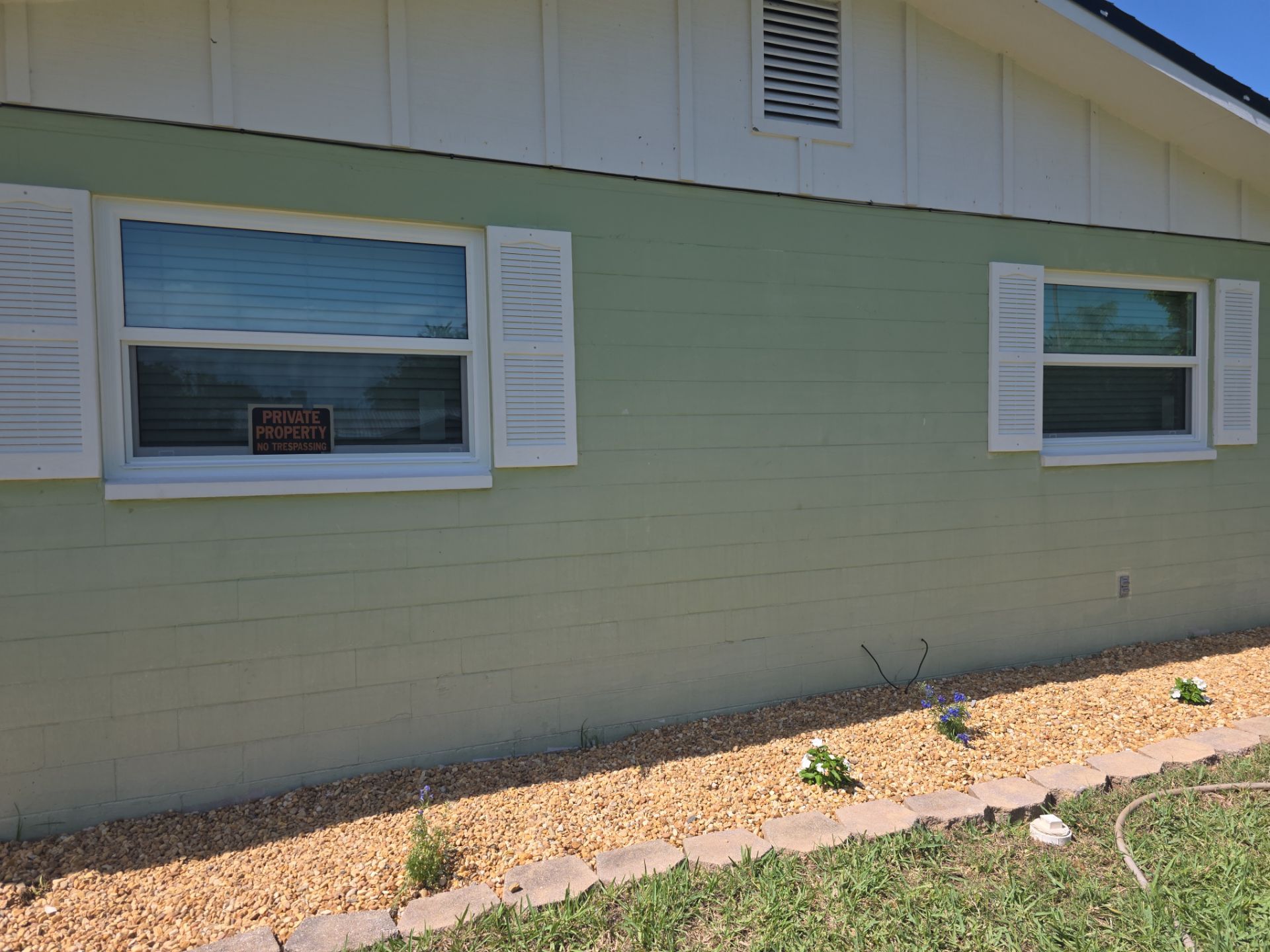
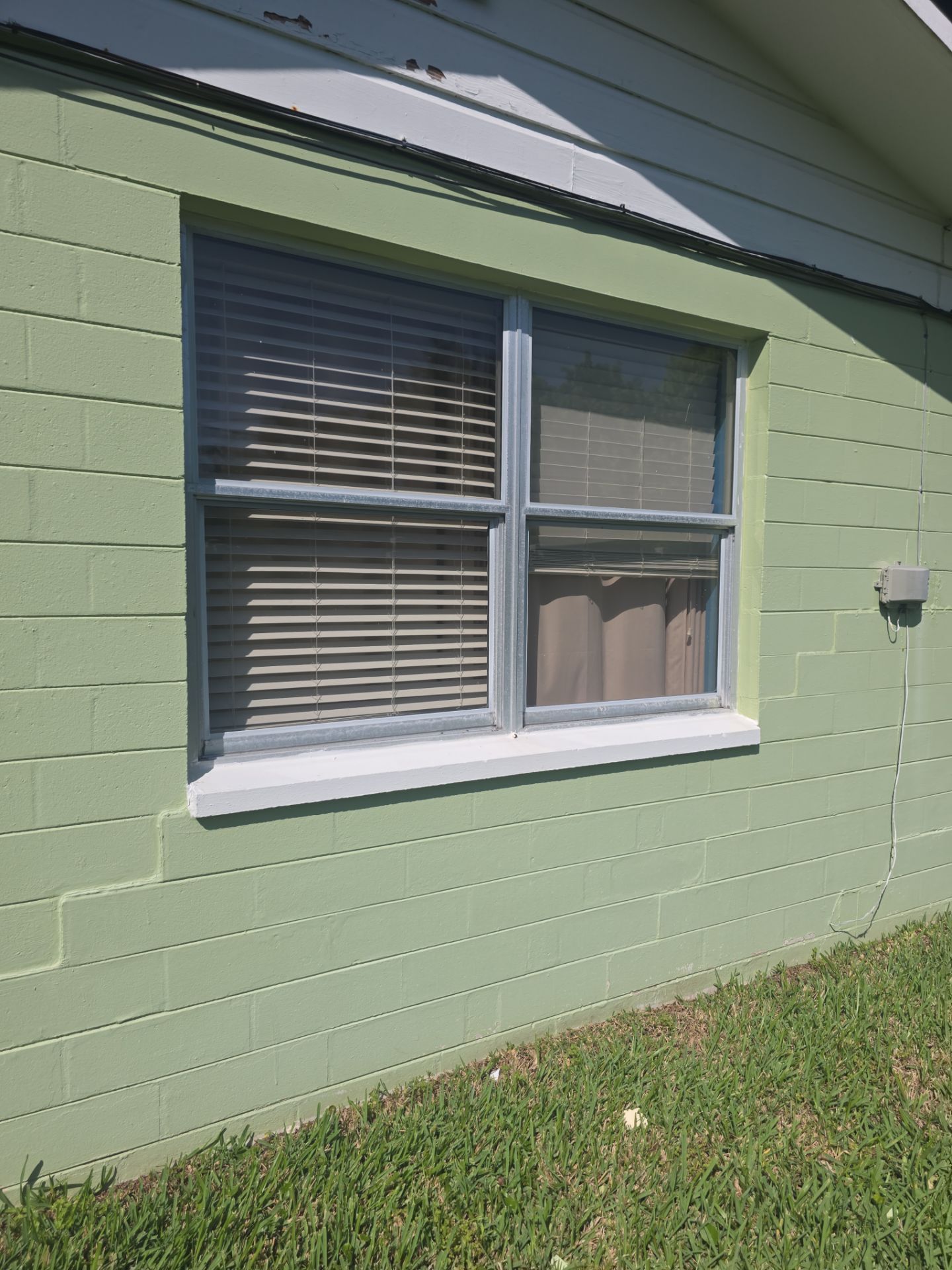
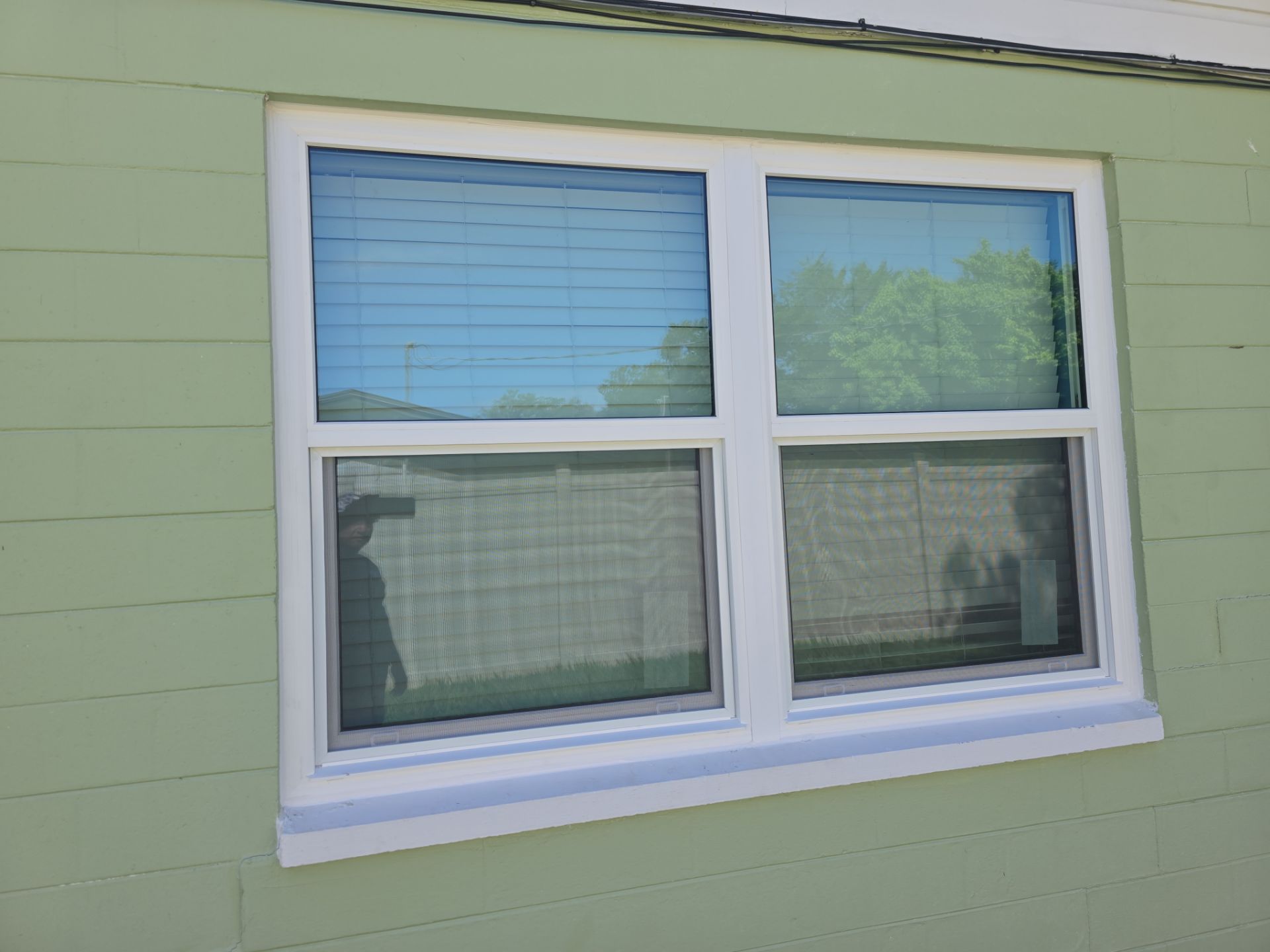
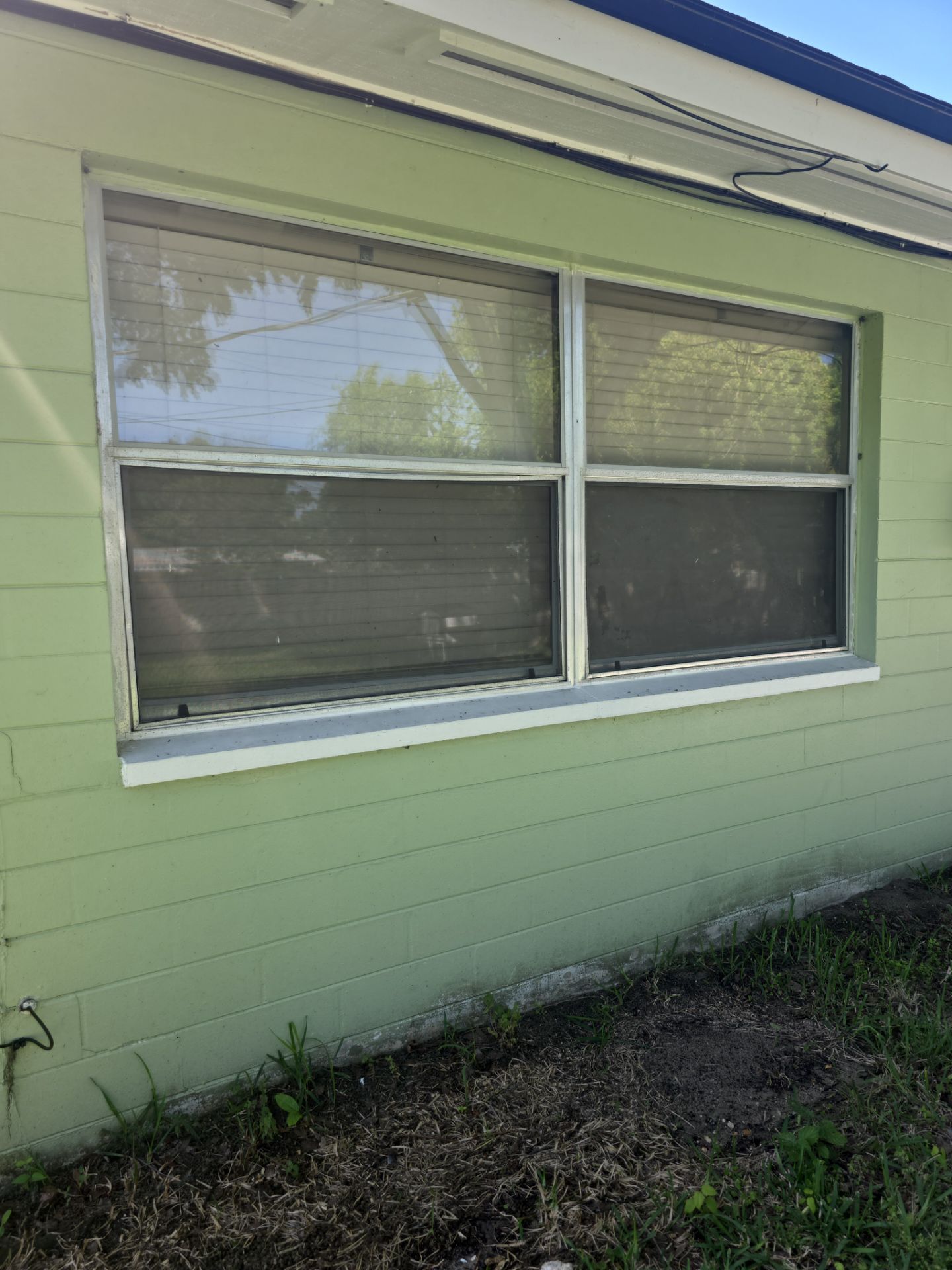
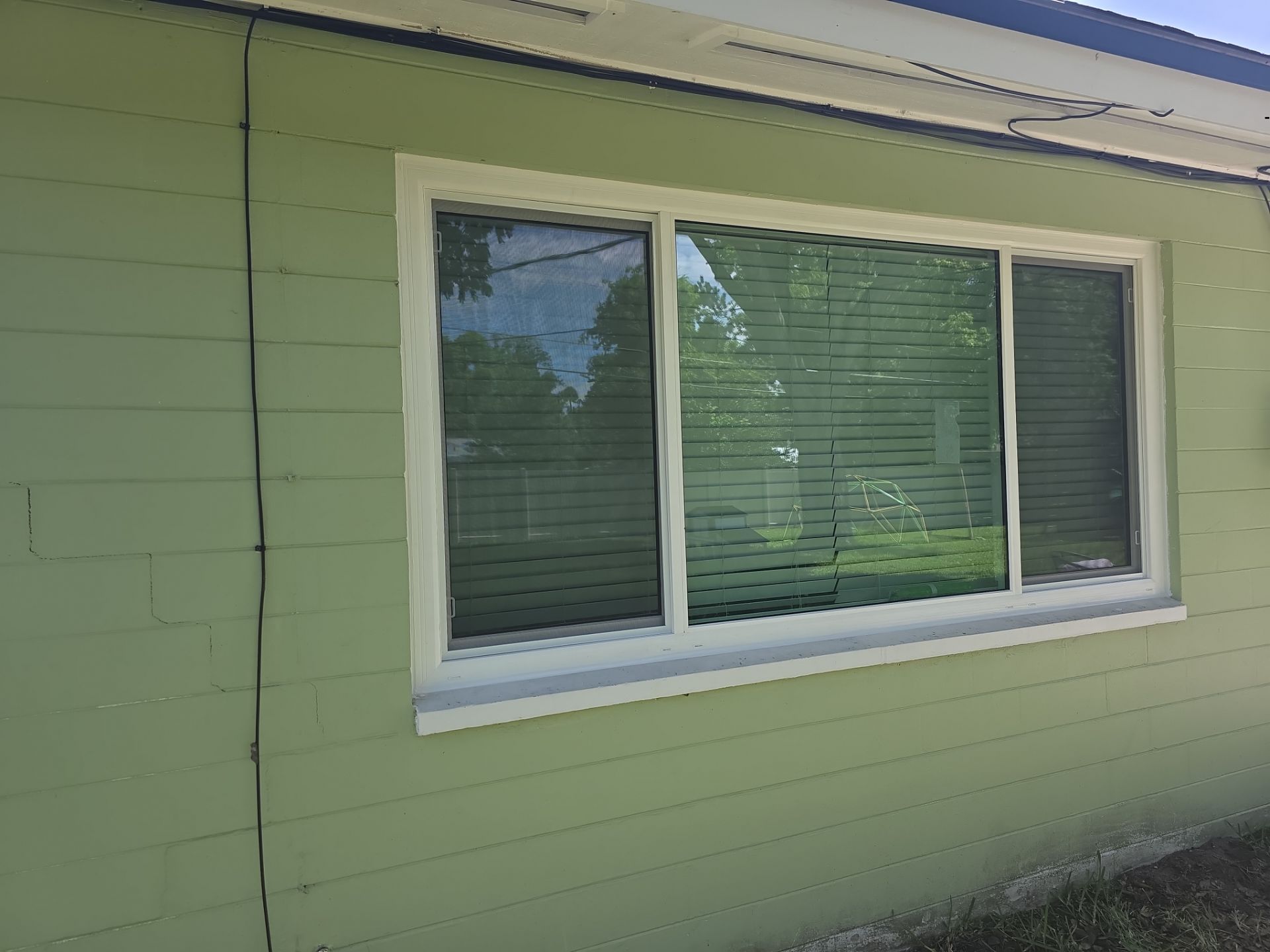
Florida window replacement: before and after
Original aluminum frames replaced with new units on a Central Florida block home.
What the installation week actually looks like
- Floor and furniture protection. We cover surfaces and move what needs to move before any glass comes out.
- Old unit removal. Existing windows come out cleanly — fasteners removed, frame separated from buck, opening exposed.
- Opening prep. Buck condition, sill condition, and waterproofing details are checked and repaired where needed before the new window goes in.
- New window set and anchored. Per the Florida Product Approval schedule for your wall type and opening size.
- Seal and trim. Foam, sealant, and exterior trim restored. Interior trim reset.
- End-of-day cleanup. Glass, old metal, fasteners, and debris removed. The home stays livable through the project.
Permits, inspections, and why they protect you
Every Florida jurisdiction requires a permit for window replacement. The permit confirms the product is approved for your wall type and opening, that the anchoring schedule is followed, and that the final installation passes inspection. A homeowner who hires an unpermitted installer takes on personal liability if something fails later. We pull the permit on every project and stay through final inspection. For more, see our permits guide.
Honest cost discussion
We don't publish a flat per-window price because Florida window replacement cost depends on opening size, wall type, product line, glass package, color, grids, jurisdiction, and access. Two homes with the same window count can quote dramatically differently. Pricing is confirmed during your free in-home consultation, in writing, with no surprise change orders. Our cost guide breaks down the underlying factors so the numbers in your quote make sense.
We replace windows across Volusia, Seminole, Orange, Lake, and Flagler counties.
Schedule a free in-home estimate. We'll walk every opening with you and put a clear written quote in your hands.
Request an estimateWindow replacement in Florida: frequently asked questions
- The most common signs are fogged or hazy insulated glass (failed seal), sashes that no longer slide smoothly or stay open, daylight or air around the frame, water staining on the interior sill, rotted wood sills, corroded aluminum hardware, and rising cooling bills with no other explanation. Original aluminum single-pane windows on Central Florida homes built in the 1970s–1990s are well past their useful life and are the most common starting point for a replacement conversation.
- Yes. Window replacement is a permitted activity in every Florida jurisdiction. The permit verifies that the product has a current Florida Product Approval, that the anchoring matches your wall type, and that the installation passes a final inspection. We pull the permit, submit the approval, and meet the inspector — homeowners don't have to chase paperwork.
- Yes. Partial replacement is common, especially when a single room has the worst exposure or a specific opening has failed first. The trade-off is that mixing old and new windows on the same elevation can look uneven, and the per-opening installation cost is higher than the per-opening cost of a larger project. We'll quote either way and explain the difference honestly.
- Most full-home replacement projects install in one to three working days once products are on site. Single-day install is common for 8–12 openings on a single-story block home. Larger projects, second stories, arched openings, or buck repairs can stretch the schedule. We protect floors, contain dust, and clean up at the end of each day so the home stays livable.
- It's a real choice. For homeowners outside the wind-borne debris region, impact glass is an upgrade rather than a code requirement. The advantages — storm protection, security, noise reduction, UV control — are real. The trade-off is higher product cost. When pulling and replacing every window is already the largest cost in the project, the incremental cost of upgrading to impact is often smaller than expected. We'll quote both ways so you can decide on a real number rather than a guess.
- Roughly 8 to 14 weeks for most projects. A few days for estimating and contract. Six to ten weeks of product fabrication (longer if you choose a specialty color, large opening, or premium product line). Permitting runs in parallel. One to three days of installation. A final inspection within a week or two after install. Hurricane season can stretch fabrication times after a named storm.