
What "impact" really means in a Florida window
An impact window is built around laminated glass — two panes bonded to a tough plastic interlayer. If something hits the window hard enough to break the outer pane, the interlayer holds the broken glass in place. The window keeps its seal, the opening stays intact, and the structural envelope of the home is preserved. That single fact is the difference between a noisy crack and a roof at risk during a storm.
Impact glass is then mounted inside a reinforced frame and anchored with a fastening schedule that has passed cyclic pressure testing alongside the large missile impact test. The result is a tested system rather than just a thicker pane. For the code-compliance angle, our hurricane windows page walks through the same product from a storm-protection perspective.
Everyday benefits Florida homeowners actually notice
Security
Standard single-pane glass shatters with one blow. Even modern insulated glass yields quickly to a determined break-in. Laminated impact glass behaves differently — the outer pane can crack while the interlayer continues to resist. Combined with multi-point locking hardware on the sash, impact windows turn a noisy point of entry into a slow, loud one, which is exactly what deters opportunistic break-ins.
Noise reduction
The same interlayer that holds the glass together also damps sound vibrations. Homes near roadways, schools, airports, or lawn-equipment-heavy neighborhoods often report the noise difference as the most surprising upgrade — sometimes more than the storm protection itself.
UV protection
A standard impact glass package blocks the large majority of ultraviolet light entering through the window. That meaningfully slows fading on hardwood floors, upholstery, art, and window treatments — a real concern in Florida sun.
Curious how impact windows would change a specific room? Tell us about it during a free in-home walkthrough.
Request an estimateEnergy performance
Modern impact windows in Florida almost always include a low-E coating tuned for hot climates. That coating reflects infrared heat back outside while letting visible light through. Replacing original single-pane aluminum windows with low-E impact units almost always produces a noticeable indoor comfort difference, especially on west and south exposures. The change to your monthly bill depends on too many other factors — HVAC efficiency, insulation, thermostat habits — for us to quote a specific number honestly.
Curb appeal and resale
New windows are one of the few replacement projects that visibly improve a home from the street the day they're installed. Buyers in Florida actively look for impact windows on listings — the protection is one less thing they have to budget for after closing.
How impact windows compare to standard replacements
For homeowners outside the wind-borne debris region, the choice is real: a quality non-impact replacement window or a comparable impact unit. Impact products cost more but deliver storm protection, security, sound, and UV benefits that non-impact windows can't match. Non-impact products can still be a strong upgrade over original single-pane aluminum frames. We walk through the trade-offs in detail in our impact vs standard windows guide.
Product approvals and what they mean for your home
Every impact window legally installed in Florida carries either a Florida Product Approval or a Miami-Dade NOA. These approvals list the specific configurations the product is tested for — sizes, anchoring schedules, wall types, and design pressures. During permitting, your building department checks that the product you're installing is approved for your wall type and opening size. We handle that paperwork and verify approvals before ordering anything.
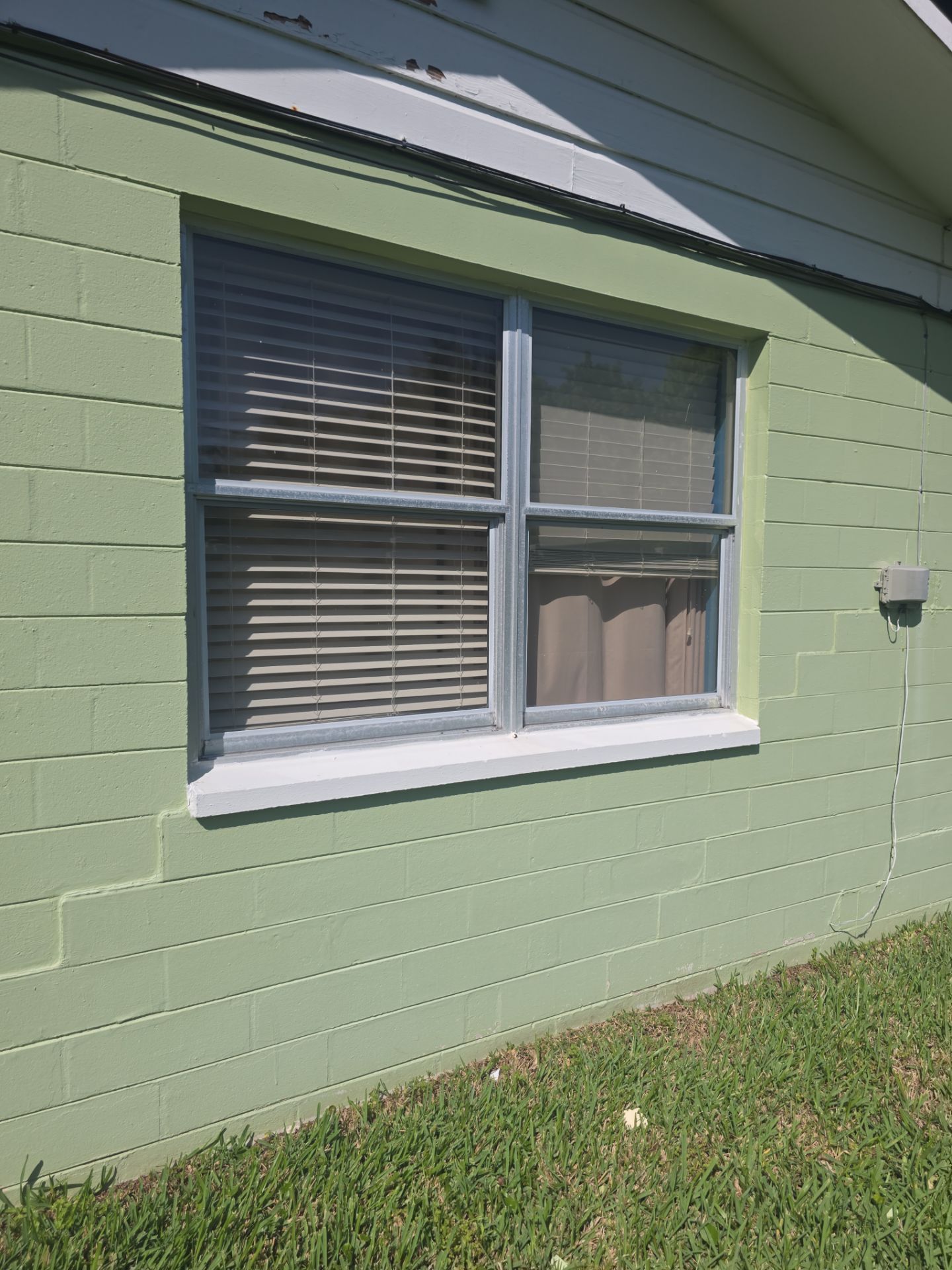
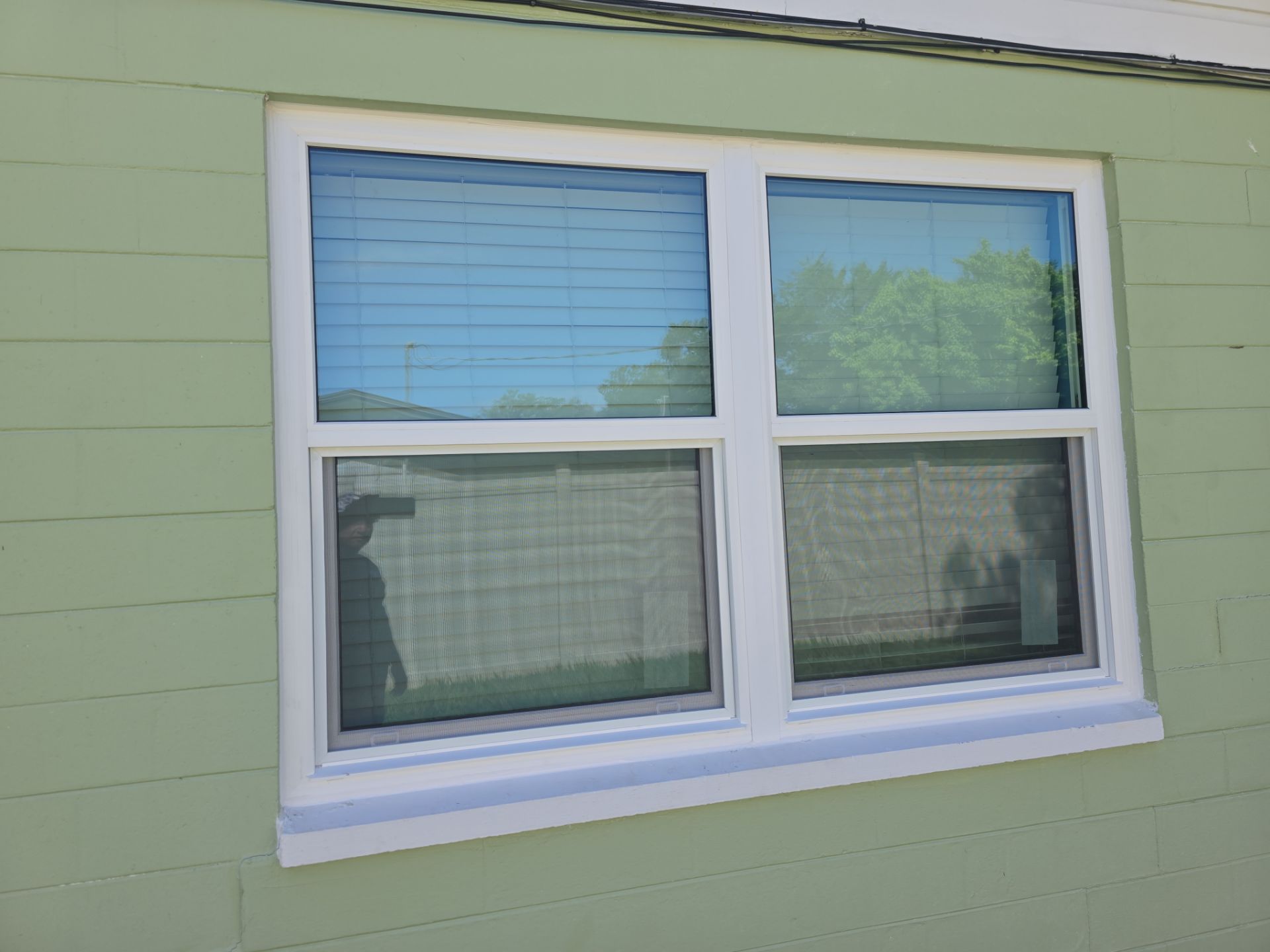
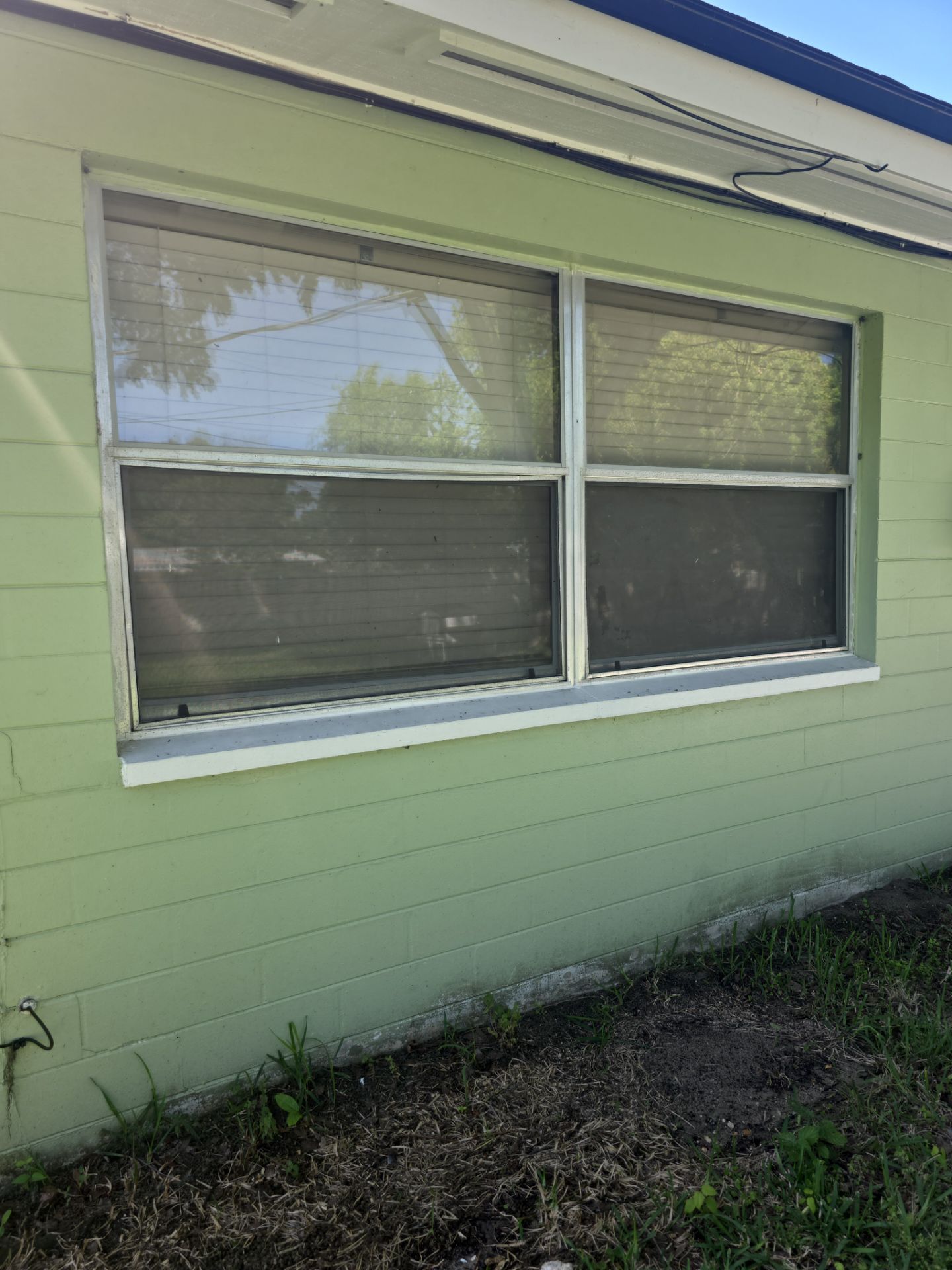
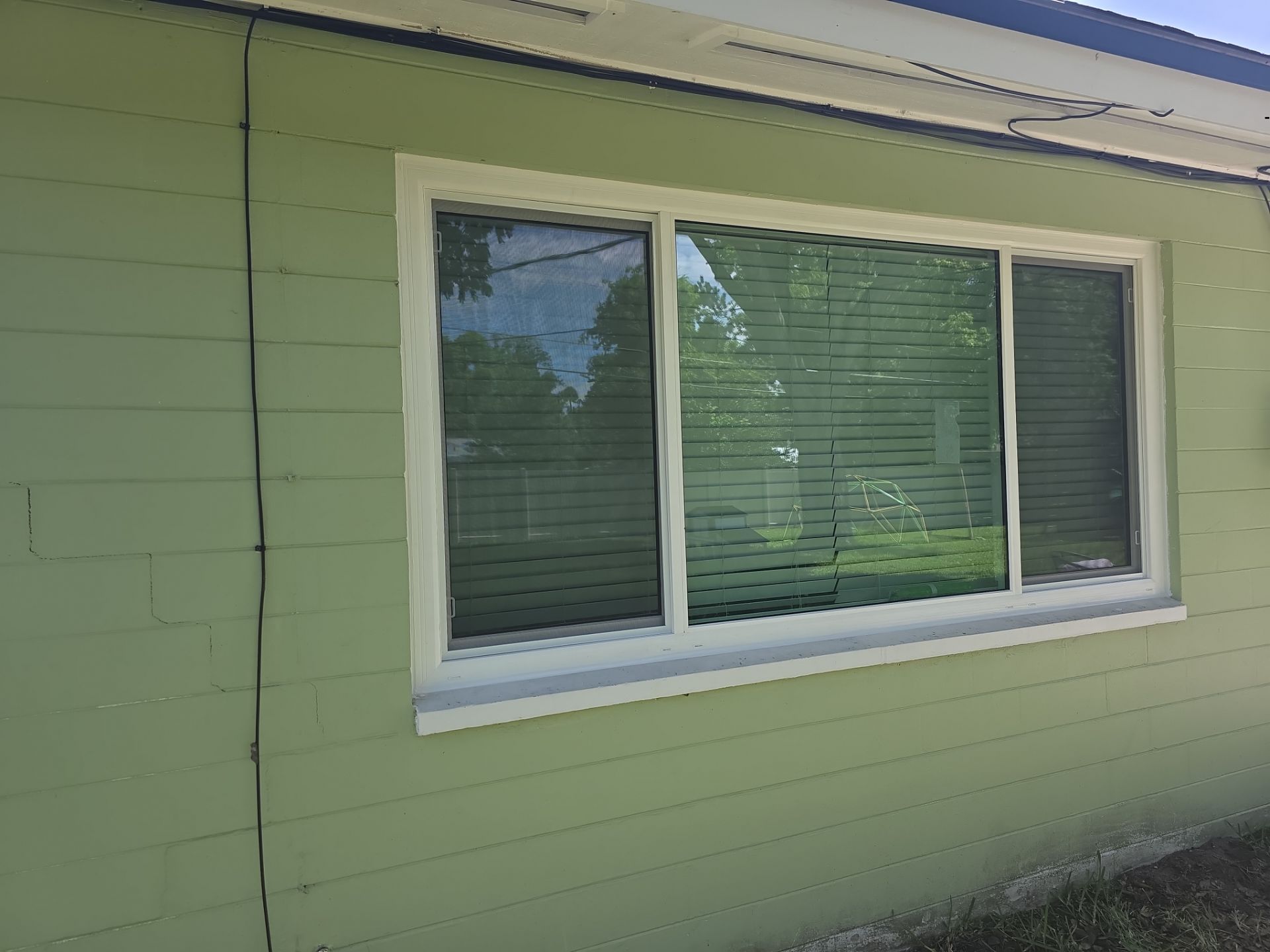
What an impact window upgrade looks like
Original aluminum-frame openings replaced with modern impact-ready units on a Central Florida block home.
Wind mitigation and your insurance
When every opening on the home is protected to the required standard, the home can qualify for the opening-protection credit on the OIR-B1-1802 wind mitigation form. Whether that credit translates into a specific dollar discount on your premium depends entirely on your insurer, your policy, your roof, and other mitigation factors — so we won't promise a number. We will explain exactly how impact windows show up on the form and what documentation to keep. For the full walk-through, see our wind mitigation guide.
When impact windows make sense as part of a larger replacement
If your existing windows are 20+ years old, have fogged insulated units, dragging sashes, or visible frame damage, impact windows are usually a natural fit during the same replacement project. Pulling and replacing windows is the largest cost driver — the incremental cost of choosing impact glass over standard glass within that project is smaller than people expect. Our broader window replacement page covers the rest of the replacement decision.
Ready to see what your project would look like in writing? Book a no-pressure in-home estimate.
Request an estimateImpact windows in Florida: frequently asked questions
- In Florida practice they are usually the same product, just described from a different angle. 'Impact windows' emphasizes the laminated glass and security side. 'Hurricane windows' emphasizes the storm protection and code compliance side. Both refer to tested systems with laminated glass bonded to an interlayer, reinforced frames, and approved anchoring. Where they differ is marketing context, not the product itself.
- Most homeowners notice a meaningful drop in outside noise after installing laminated impact glass. The interlayer that holds the glass together during a storm also damps sound waves more effectively than standard insulated glass. The exact difference depends on your existing windows, glass thickness, and the dominant noise sources — but for homes near roads, schools, or busy neighborhoods, the change is usually obvious from day one.
- Modern impact windows in Florida almost always include a low-E coating tuned for hot climates. That coating reflects infrared heat back outside, lowering the cooling load on your HVAC system. The actual change to your power bill depends on your existing windows, your home's insulation, your thermostat habits, and your HVAC efficiency, so we won't promise a specific number. We will say that replacing original single-pane aluminum windows with modern impact units is almost always a noticeable comfort upgrade — especially on west and south elevations.
- Laminated glass is significantly harder to break through than standard glass. Even after the outer pane cracks, the interlayer holds the assembly together. For a burglar trying to gain a quick, quiet entry, that's a meaningful deterrent — and once the locked sash and reinforced frame are added in, impact windows are one of the strongest passive security upgrades available to a Florida home.
- A wind mitigation inspection (using the OIR-B1-1802 form) documents the storm-resistant features of your home — roof shape, roof attachment, opening protection, and a few other items — for your insurance carrier. Impact-rated windows can qualify the home for the 'opening protection' credit when every opening (windows, doors, skylights, garage door) is protected to the required standard. We walk through how this works in our wind mitigation and insurance guide.
- No. Impact-rated windows are themselves an approved form of opening protection under the Florida Building Code. Many homeowners actually remove their old shutter tracks after impact window installation — the windows have already passed the same large-missile test the shutters were designed to satisfy. Some still keep decorative shutters for curb appeal, which is purely aesthetic.