
What a Florida front door has to handle
Florida front doors face a tougher environment than most people realize. Direct south or west sun bakes the slab for half the year. Daily afternoon thunderstorms test the weather-strip. Salt air, even miles inland on a breezy day, attacks unprotected metal hardware. A tropical system can pressure-test the entire opening within a 24-hour window. A door designed for a mild climate will look tired in five years and may not satisfy your insurance carrier's wind mitigation expectations.
A door built for Florida solves all of those things at once — a stable slab material, a well-engineered frame, corrosion-resistant hardware, real weather sealing, and tested impact resistance where the code requires it.
Slab materials: fiberglass and steel
Fiberglass entry doors
The default recommendation for most Central Florida homes. Fiberglass doesn't rust, doesn't rot, resists humidity, holds finishes well, and accepts realistic wood-grain texturing that doesn't fade under the sun the way painted steel or stained wood can. Premium fiberglass doors come pre-finished with multi-coat factory paints that hold up for many years before needing attention.
Steel entry doors
A strong, secure, lower-cost option. Modern steel exterior doors are insulated cores wrapped in galvanized steel skins, then painted. They're easy to maintain inland, can dent on impact, and need the finish kept intact at edges and screws to stay corrosion-free near salt air. For inland Florida budgets, modern steel is still a real contender.
Wood entry doors
Beautiful when maintained, demanding when not. Real wood doors in Florida need refinishing on a regular cycle to handle UV and humidity. Worth it for the right architectural context, but not the practical default for most homes.
Not sure which material fits your home and budget? Let's walk it through in person.
Request an estimateGlass options: looks and protection together
Decorative glass is what gives a modern front door personality. Clear, textured, beveled, leaded, contemporary geometric — every reputable manufacturer offers a wide library of patterns. The important Florida-specific question is whether your address requires impact-rated glass. Inside the wind-borne debris region, decorative glass inserts have to be laminated and tested as part of the door system. Outside the region, you have a choice between impact and non-impact decorative glass.
Sidelights (the narrow glass panels flanking the door) and transoms (the glass above) are treated as part of the same opening. If the door system has to be impact-rated, so do they. Manufacturers test pre-defined door-plus-sidelight-plus-transom combinations to make this straightforward. See our Florida Building Code & impact windows guide for the underlying code framework that governs doors as well.
Hardware that holds up
Hardware is where Florida front doors quietly age fastest. Brass and brass-look finishes can corrode and pit. Bright chrome shows water spots. Powder-coated black finishes generally hold up well; satin nickel and modern matte black are popular and durable. Multi-point locking systems — where the latch engages the strike at multiple points along the door edge — are increasingly standard on premium doors and meaningfully improve security and pressure-handling during storms.
From our Central Florida portfolio
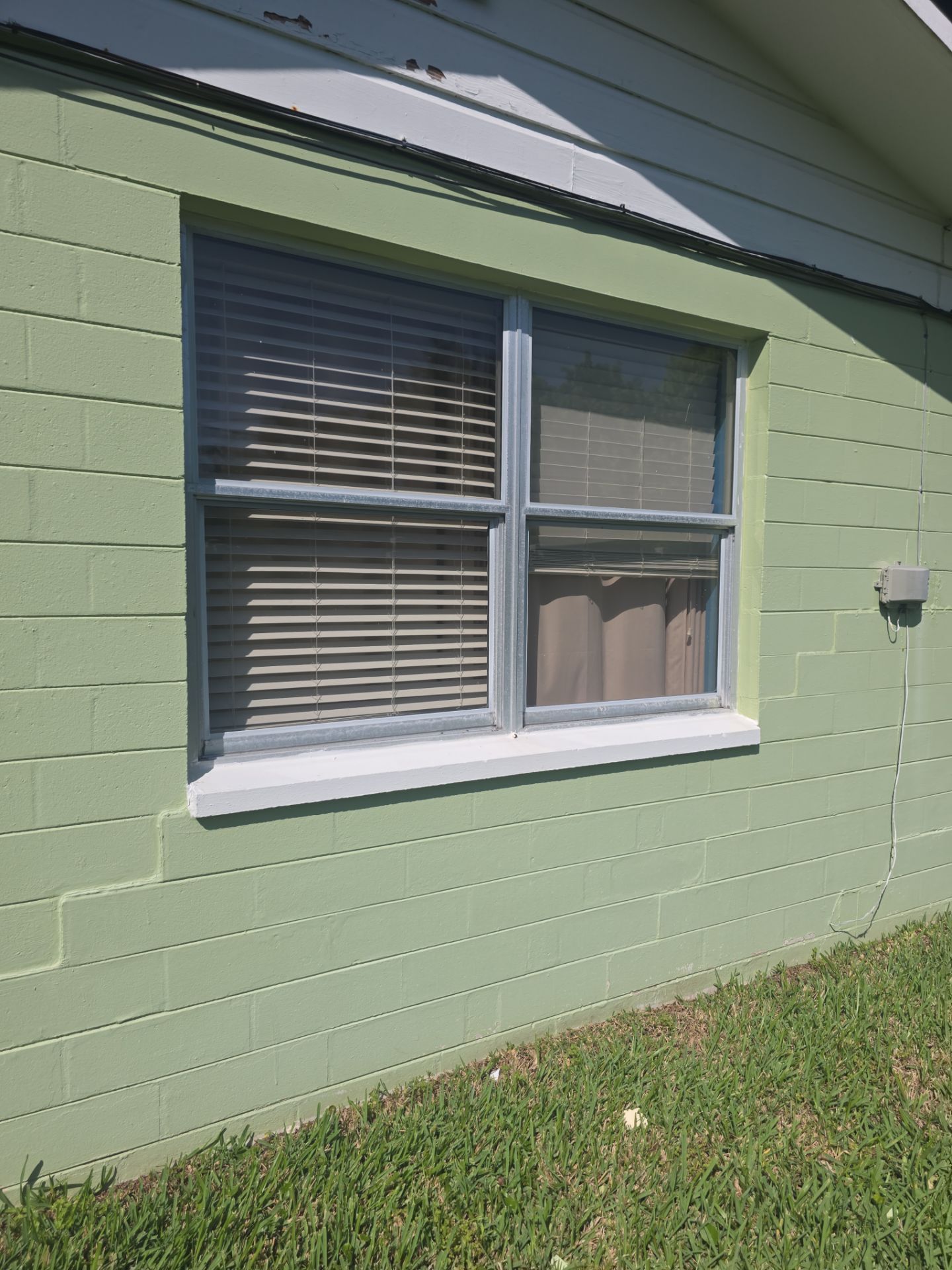
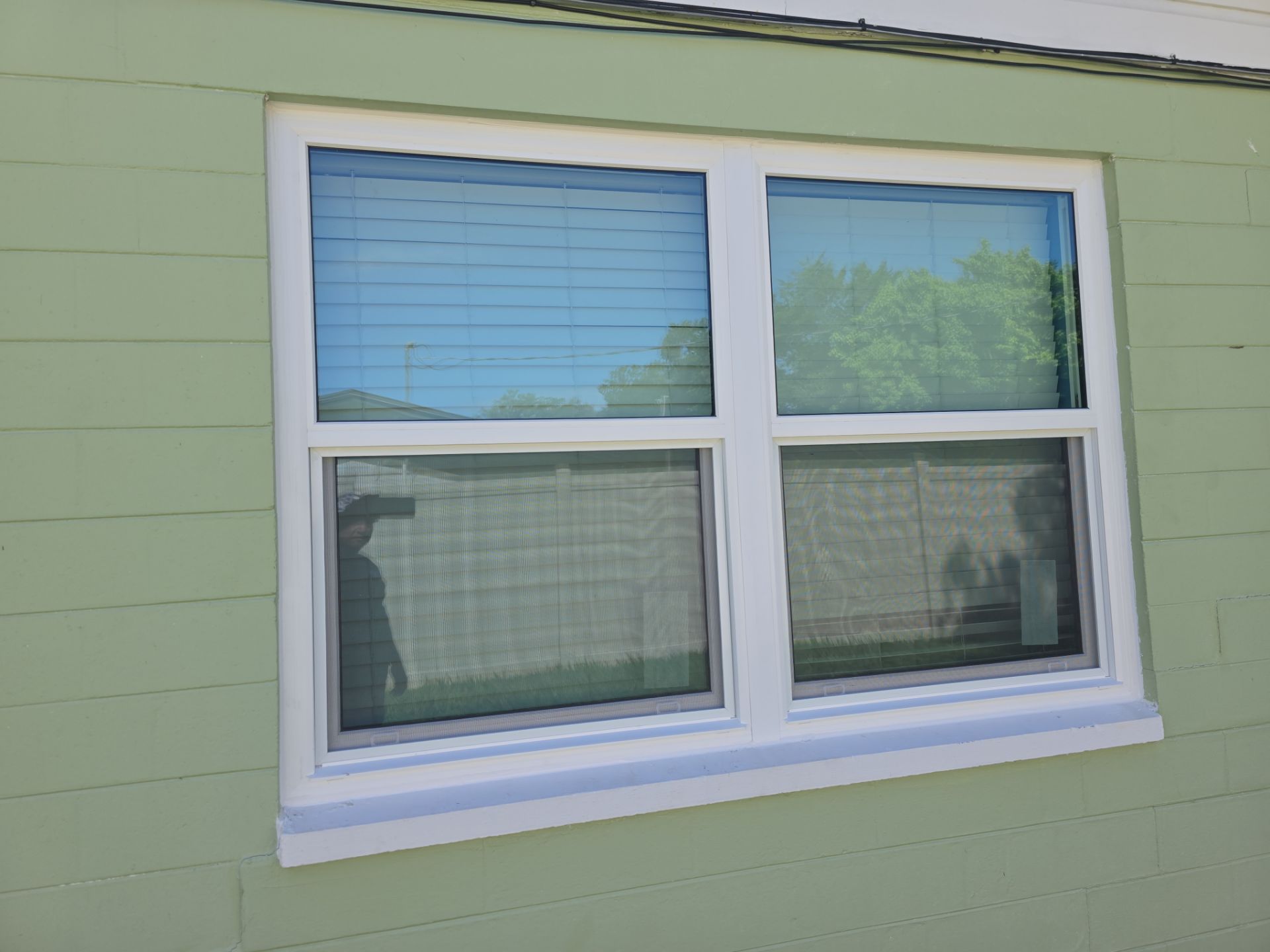
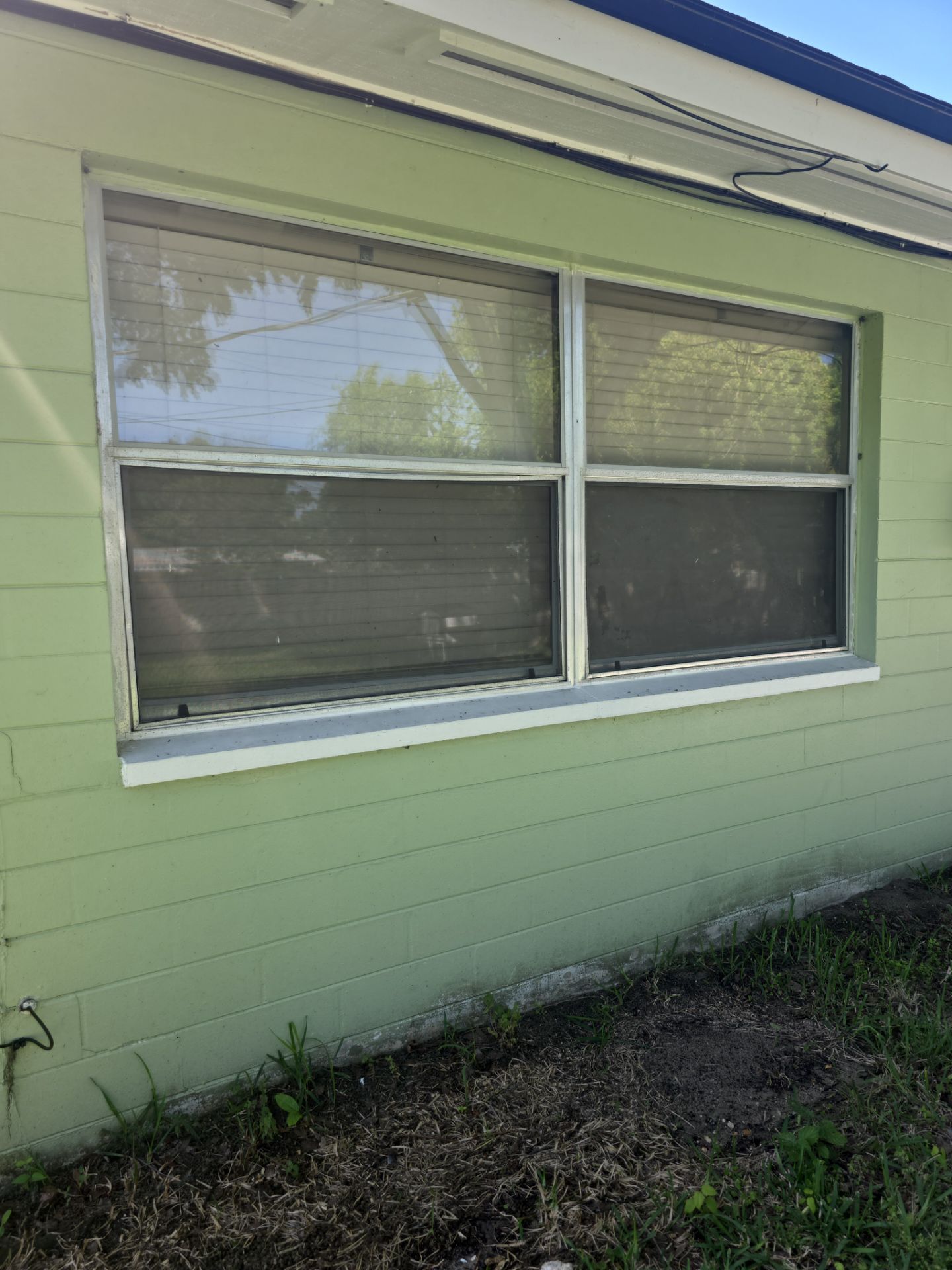
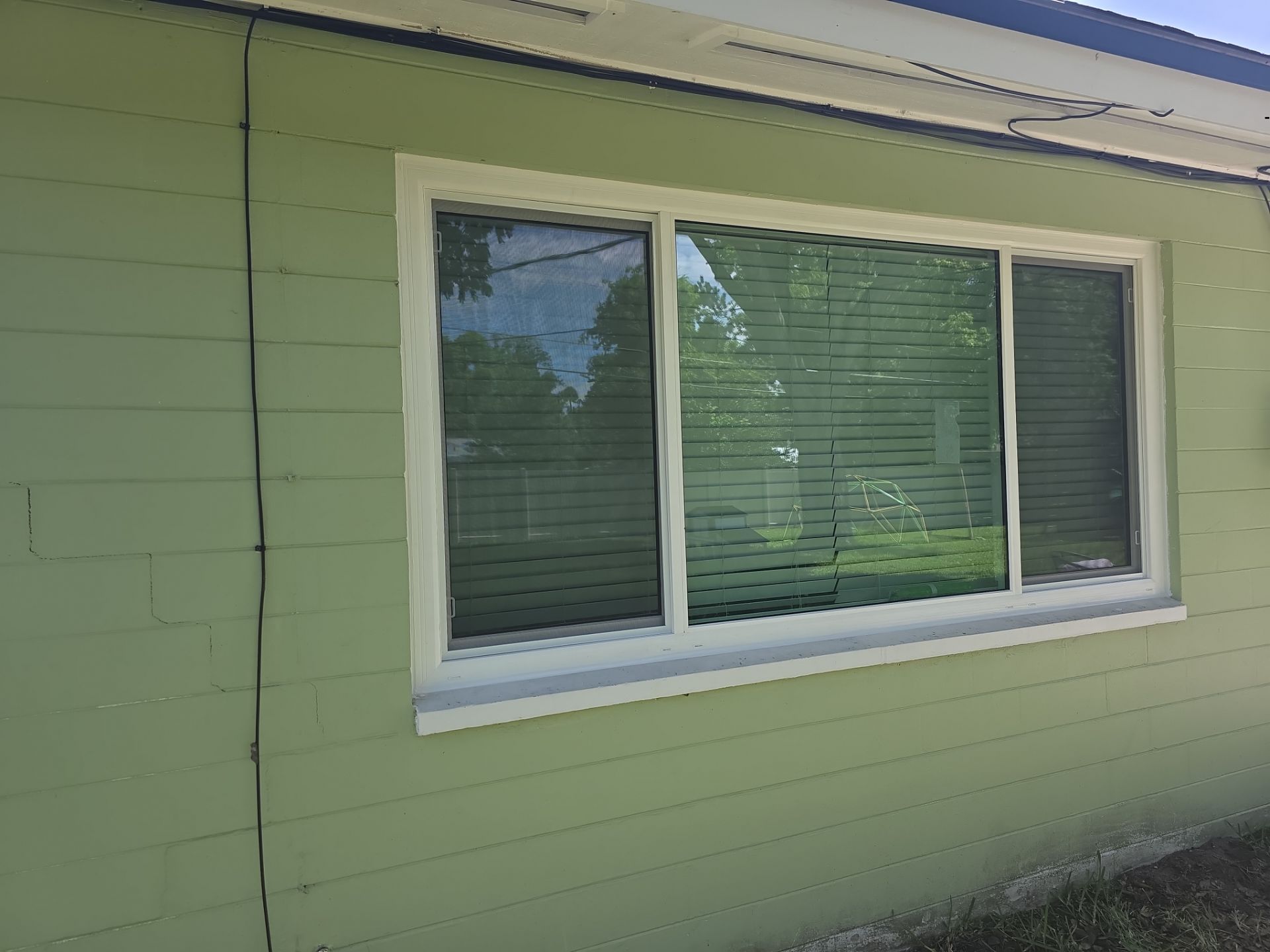
Window and door replacement projects on a Central Florida block home.
Weather sealing and water management
The threshold and sweep are where most exterior doors fail first. A modern entry door uses an adjustable threshold, a continuous bottom sweep, and full-perimeter weather-stripping that compresses evenly when the door closes. Done right, the door stays sealed during driving rain and doesn't whistle on windy nights. Installation matters as much as the product — a great door installed without sealing the threshold properly will still leak.
Pairing entry doors with the rest of the project
Many homeowners replace the front door at the same time as their windows or as part of an impact-rated opening protection upgrade. The economics often work — the visit, demo, and permitting overlap with the larger project. Other times the entry door is its own standalone project because the existing windows are still good. Either way works. Related pages:
- Impact doors overview — how all door categories fit together
- Sliding glass doors — patio and lanai openings
Permits and what installation actually looks like
We pull the permit, submit Florida Product Approval documentation, and stay through the final inspection. Installation typically takes most of a day per opening when sidelights or transoms are involved, less for a simple single-door swap. The home stays livable throughout — we protect floors, contain dust, and finish before sundown wherever possible.
We install across Volusia, Seminole, Orange, Lake, and Flagler counties.
Ready to talk about a new front door? Free in-home estimate, written quote, no pressure.
Request an estimateEntry doors in Florida: frequently asked questions
- Both can be excellent in Florida. Fiberglass resists humidity, doesn't rust, doesn't dent, and accepts realistic wood-grain finishes that hold up for years. Steel offers a high security baseline at a lower price point and a wider color palette, but the skin can dent and coastal salt air can attack edges if the finish is compromised. For most Central Florida homes we lean fiberglass; for inland homes on a tight budget, modern steel is still a strong choice.
- Yes. Most reputable manufacturers offer laminated impact glass options across their decorative glass patterns — clear, textured, beveled, leaded looks, and contemporary patterns. The glass is built into a tested door system, which means you don't have to choose between the look you want and code compliance. We'll show available patterns during the consultation.
- If the door system is required to be impact-rated (inside the wind-borne debris region), then the entire opening — door, sidelights, and transom — has to be tested and approved as a system. You cannot install an impact-rated door slab with non-impact sidelights and call the opening protected. Most manufacturers have pre-tested door-plus-sidelight-plus-transom configurations to make this straightforward.
- A well-installed modern entry door with multi-point locking hardware, a reinforced strike plate, and impact-rated glass is a meaningful security upgrade over a typical builder-grade or aging exterior door. The slab is harder to kick, the hardware is harder to defeat, and the glass — if any — is much harder to break through quietly. Security is one of the most common reasons Florida homeowners replace an entry door even when the original isn't visibly failing.
- Marginally on its own. The largest energy losses in most Florida homes are through windows and the attic, not the front door. That said, an old door with a failed sweep, worn weather-stripping, and gaps at the threshold can leak a surprising amount of conditioned air. A properly sealed modern door with insulated core and tight weather-strip removes that loss. Combined with a window replacement project, the cumulative comfort difference is noticeable.
- Yes. Exterior door replacement is a permitted activity in every Florida jurisdiction. The permit verifies that the door system has a current Florida Product Approval, that the anchoring matches your wall type, and that the installation passes a final inspection. We pull the permit, submit the approval, and meet the inspector — homeowners don't have to chase paperwork.