
Why the lanai slider is such a Florida fixture
Florida homes are built around the connection between living space and outdoor space. The lanai, the pool deck, the screened porch — they're not afterthoughts, they're the point. The sliding glass door is what makes that connection work: a wide view when closed, a wide opening when open, and a controlled threshold between conditioned air and humidity.
When that slider stops sliding, drags on the track, leaks during summer storms, or whistles on windy nights, the room behind it stops feeling like Florida and starts feeling like a maintenance problem. Replacement is one of the higher-impact upgrades you can do to the everyday feel of a Florida home.
Configurations homeowners actually choose
Two-panel sliders
One fixed panel, one operable. The simplest configuration, the most affordable, the easiest to replace. Most common width range: 5 to 8 feet.
Three-panel sliders
Two fixed panels flanking a center operable, or one fixed and two stacking panels. Common on Central Florida lanais covering 9 to 12 feet.
Four-panel sliders
Often two operable panels meeting in the middle (bi-parting) or stacking to one side. Covering 12 to 16 feet of opening. Heaviest assembly — roller and track quality matter.
Pocketing sliders
Panels disappear into a wall cavity for a fully open opening. Stunning when conditions allow, expensive to retrofit, but unmatched for indoor/outdoor flow on the right home.
Curious which slider configuration would work on your opening? Ask us — we'll measure it on site.
Request an estimateWhat makes one impact slider outlast another
Rollers and tracks
The single biggest predictor of how a Florida slider feels in year 10. Quality systems use stainless or coated steel rollers riding on a hardened track. Cheap systems use plastic rollers on aluminum that pits and grooves. Both look identical on day one. They feel very different a decade later.
Frame extrusion and reinforcement
Impact sliders carry a lot of glass — and laminated impact glass is heavy. Reinforced extrusions stay square; lighter extrusions can sag at the meeting rail over time. The difference shows up at the latch.
Sill detail and water management
Modern impact sliders use a multi-chamber sill that drains wind-driven rain back outside rather than into the room. The interlock between the operable and fixed panels carries a weather-strip that has to stay flexible in heat and humidity.
Hardware and locks
Heavier slider assemblies need stronger hardware. Multi-point locks engage at multiple points along the meeting rail rather than a single hook at the handle. This matters for security and for keeping the assembly square under pressure during storms.
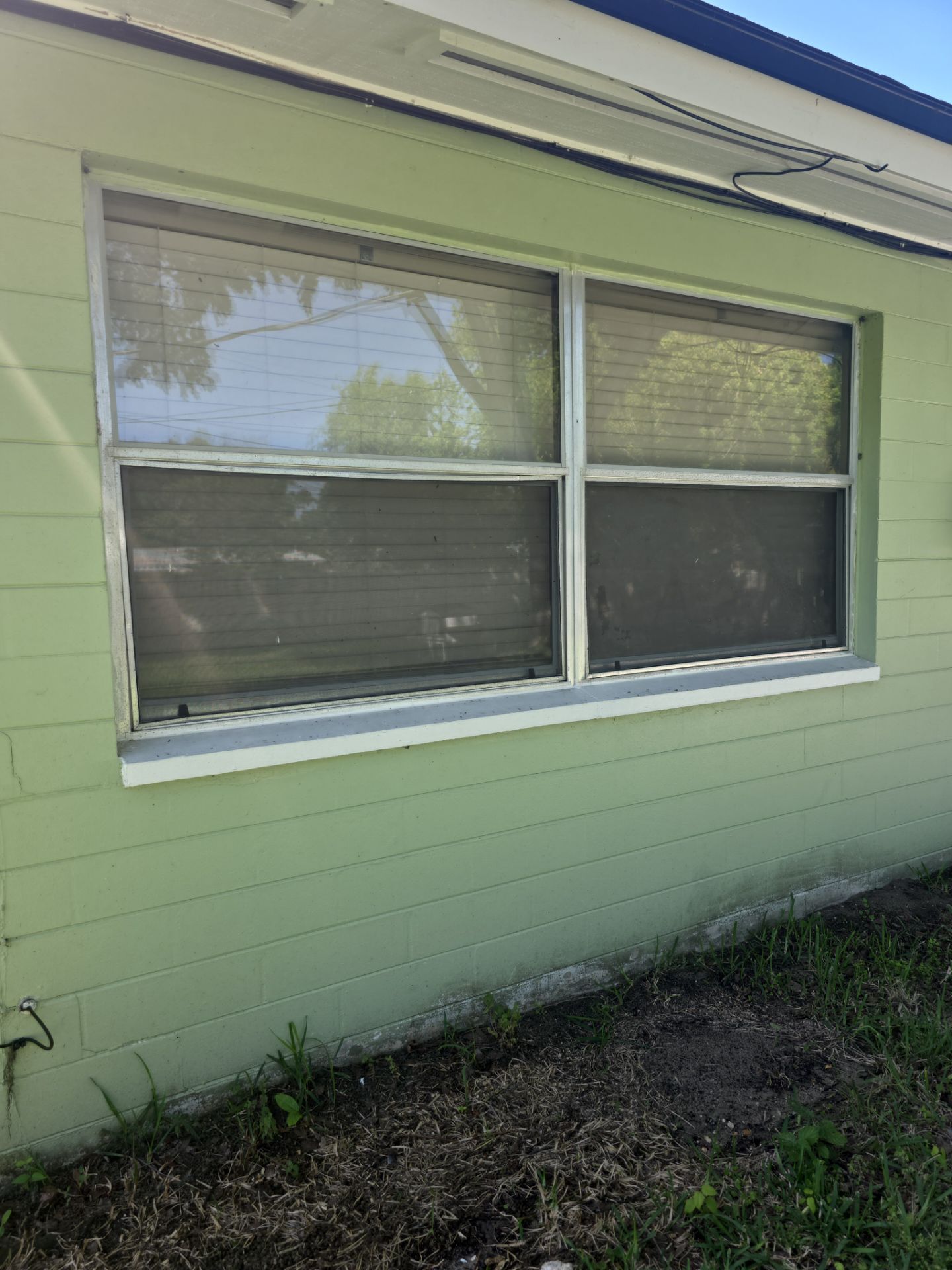
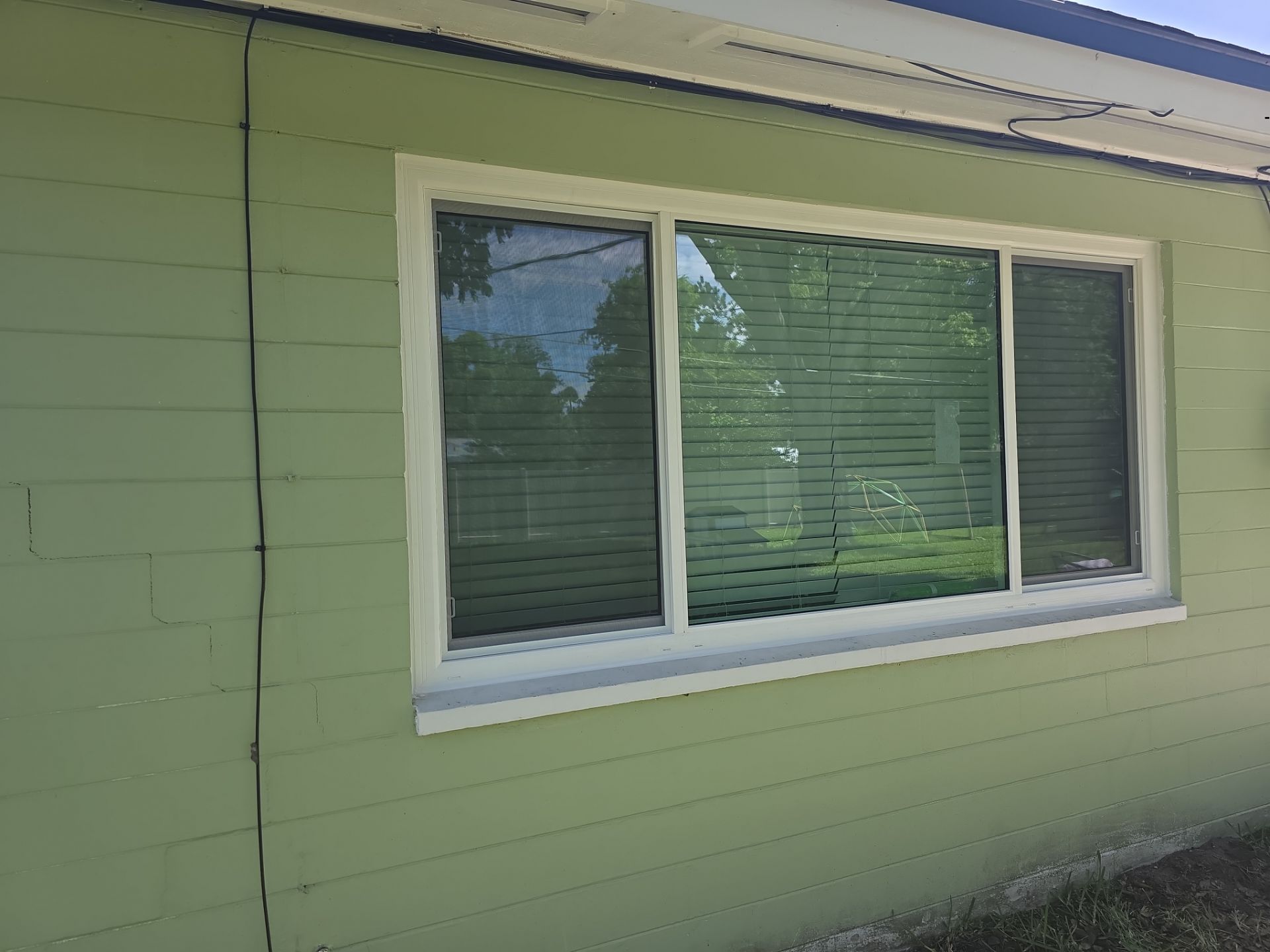
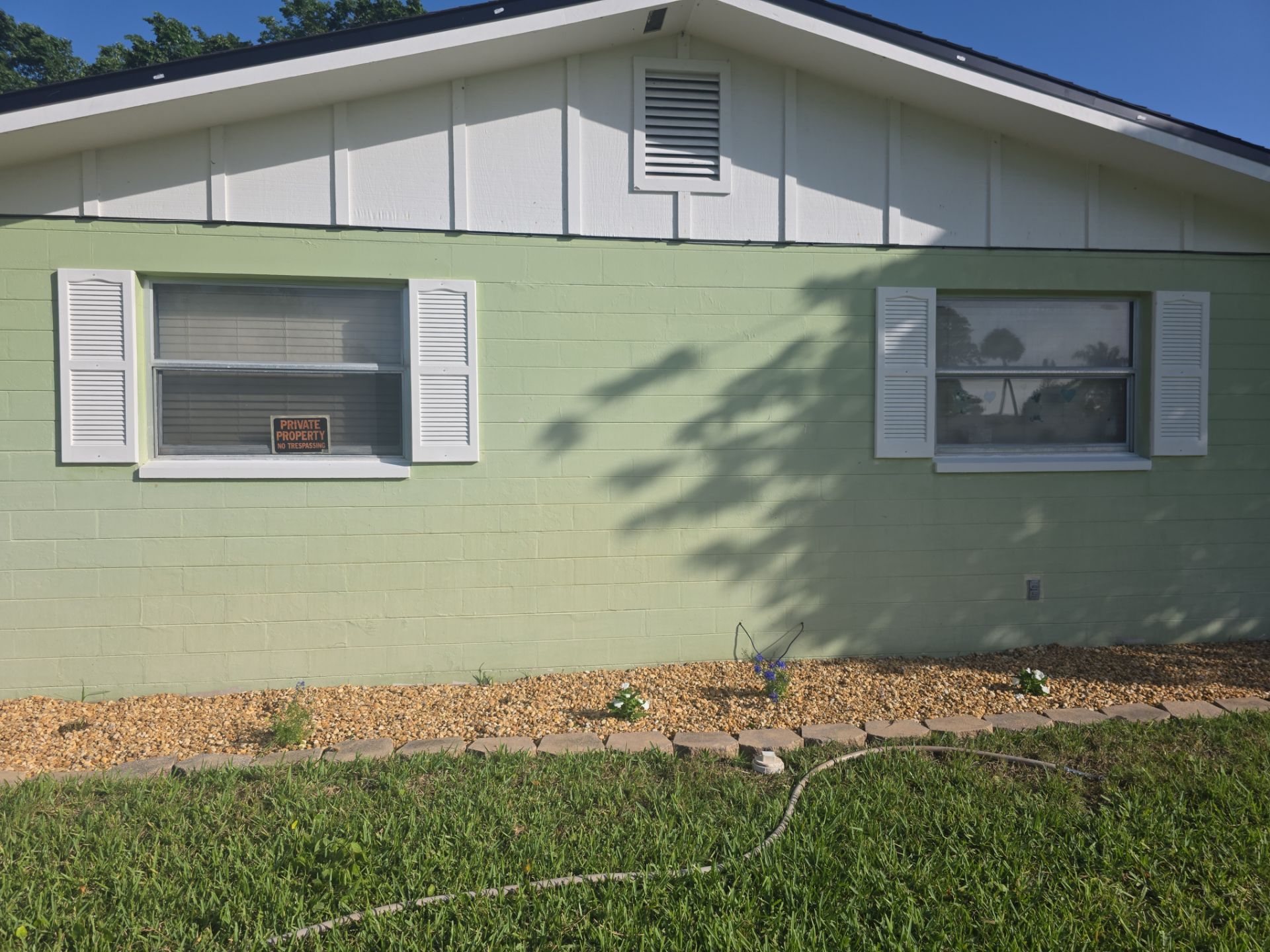
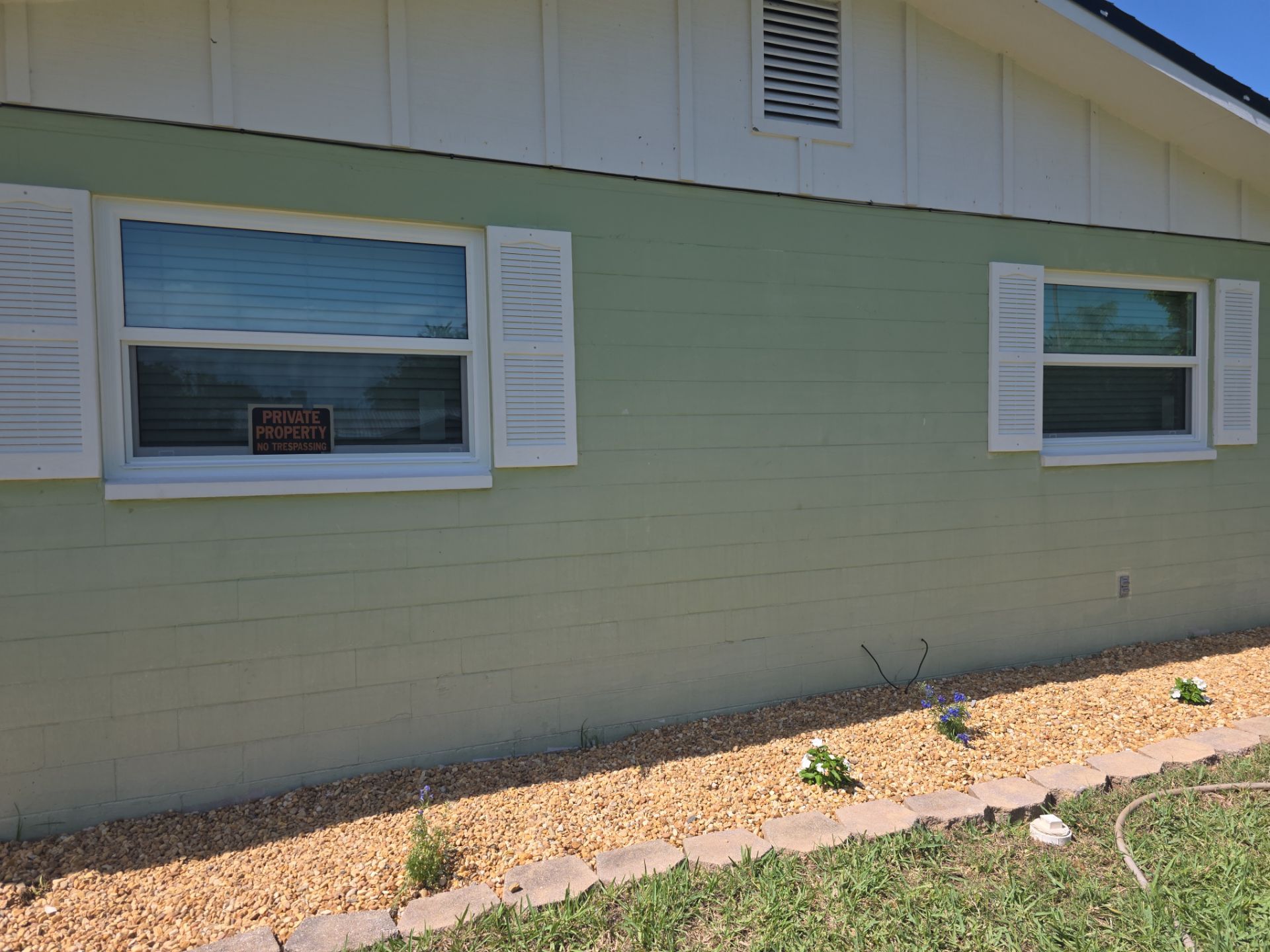
Before and after on a Florida block home
Original frame openings replaced with new units on a Central Florida block home.
Storm protection without losing the view
Impact sliders solve the historical Florida trade-off between big lanai openings and storm protection. A four-panel impact slider passes the same large missile impact test and cyclic pressure test as an impact-rated entry door — meaning your widest opening is also your most code-compliant. No shutter tracks, no plywood, no pre-storm setup. We cover the underlying code framework in detail on the hurricane windows page.
Replacement process for a typical lanai slider
- Walk-through and measurement. Opening width, height, sill condition, interior and exterior clearance, threshold height vs deck.
- Configuration selection. Number of panels, which panel(s) operate, stacking direction, handle hardware, color, screens.
- Glass package. Laminated impact, low-E coating, optional tinting or obscure glass where wanted.
- Permit and product approval. Filed with your building department.
- Installation. Typically one day on site for a standard 2- or 3-panel slider, longer for larger or pocketing systems.
- Final inspection. Building department signs off; we hand over the documentation.
Cost factors and where to start
Slider pricing is driven by opening width, panel count, glass package, color, hardware, and threshold conditions. A two-panel impact slider on a clean opening is a very different project than a four-panel system replacing a heavily corroded original. We confirm pricing during the in-home consultation. The factors are explained in detail in our cost guide.
We work across Volusia, Seminole, Orange, Lake, and Flagler counties.
Measure with us in person. The right slider depends on the actual opening, not a template.
Request an estimateSliding glass doors in Florida: frequently asked questions
- Single-panel widths typically run up to about 6 feet, but the whole assembly can be much wider with multiple panels. Three-panel and four-panel impact sliders covering 12 to 16 feet are common on Central Florida lanais and pool decks. Beyond that, multi-track systems and pocketing doors are available but require specific structural conditions in the opening above. We confirm what's realistic for your wall during the consultation.
- Almost always the rollers. After 15 to 25 years of Florida sun and grit, the rollers wear flat, the bearings seize, and the track gets pitted. Pressure-washing the track and lubricating the rollers helps for a season, but the underlying wear isn't reversible. Replacement sliders with quality rollers and a clean track open with one finger, even on heavy impact-rated assemblies.
- Generally yes, when properly installed. Modern impact slider systems are tested for water infiltration at specific design pressures, and the sill detail, interlock, and weather-stripping all work together to manage wind-driven rain. Older sliders predate those standards entirely. The biggest source of leaks on any slider — old or new — is poor installation at the sill, not the door itself, which is why installer experience matters.
- Yes, pocketing impact sliders exist and look fantastic when you want a fully open patio. They require an existing pocket cavity inside the wall or a structural modification to create one, and they cost meaningfully more than a stacking slider. Worth it for the right project, not worth retrofitting on every home. We'll tell you honestly during the walk-through whether it's realistic for your opening.
- Yes. Sliding door replacement is a permitted activity in every Florida jurisdiction. The permit verifies that the product has a current Florida Product Approval, that the anchoring is correct for your wall type, and that the installation passes a final inspection. We handle the permit, the product approval submission, and the inspector visit.
- Often yes, depending on the opening size and the door manufacturer's approved configurations. French doors swap a smooth horizontal motion for a wider clear opening and a more traditional look. The trade-off is that swinging doors take floor space inside or outside the room — something to think through before committing.
See also our impact doors overview for entry-door specifics that often pair with a slider project.